Tachycardia: Fast Heart Rate
The normal rate for a heart to beat is 60-100 beats per minute. Tachycardia is when the heart beats too fast, at a rate of more than 100 beats per minute, when at rest. This can depend on age, health status and physical condition. Learn about the types of tachycardias:
- Supraventricular Tachycardia (SVT)/ Paroxysmal Supraventricular Tachycardia (PSVT)
- Sinus Tachycardia
- Ventricular Tachycardia
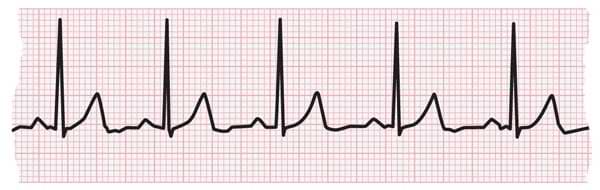
ECG strip showing a normal heartbeat
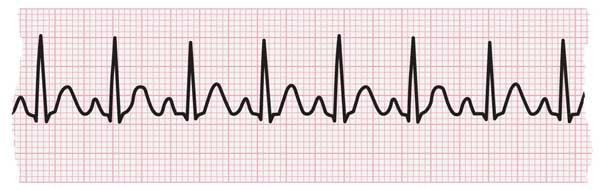
Supraventricular Tachycardia (SVT)/ Paroxysmal Supraventricular Tachycardia (PSVT)
SVT is a fast heart rate, greater than 100 beats per minute or more, which starts in the atria, the upper chambers of the heart. The electrical signals occur abnormally and speed up the heart rate. The rapidly beating heart prevents the heart chambers from filling completely between contractions (beats), which may compromise blood flow to the body.
SVT is the most common heart arrhythmia in infants and children. Paroxysmal SVT means that the abnormality may come and go over minutes or days.
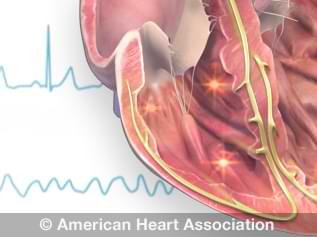
View an animation of tachycardia.
Risk factors for SVT/PSVT
- Anxiety and stress
- People middle age and older
- Women more than men
- Children (SVT is the most common heart arrhythmia in children)
For some people, SVT/PSVT is triggered by exercise, stress or lack of sleep, while others do not notice anything at all.
Issues that may cause an SVT episode include:
- Age
- Anemia
- Heart disease
- Dehydration
- Coronary artery disease; having had cardiac surgery or other heart problems
- Congenital heart disease
- Other heart conditions, such as Wolff-Parkinson-White syndrome
- Chronic lung disease
- Excessive caffeine intake
- Excessive alcohol intake
- Smoking or other tobacco products, drug misuse, including cocaine and methamphetamines.
- Pregnancy
- Menopause
- High blood pressure
- Certain over-the-counter medications, including those for asthma, colds and allergies.
Symptoms of SVT/PSVT
- Very fast (rapid) heartbeat that may come and go
- A fluttering or pounding in the chest (palpitations)
- A bounding pulse sensation in the neck
- Weakness or feeling very tired (fatigue)
- Chest discomfort
- Shortness of breath
- Lightheadedness or dizziness
- Sweating
- Fainting (syncope) or near fainting
- Nausea
How SVT/PSVT is diagnosed
SVT
After giving a detailed medical history (including asking about potential causes) and a list of symptoms to a health care professional, patients will be advised to get an electrocardiogram (ECG or EKG).
PSVT
Because PSVT is “paroxysmal” (occasional and sudden), an office ECG may look normal. To "catch" an episode, a doctor may suggest a portable heart monitor (Holter monitor or event monitor) to wear at home that will record your heart rhythm over time.
Treatment
Most people with SVT/PSVT don't need treatment. However, an episode may be stopped with one of these techniques, under the supervision of a health care professional. These affect the vagus nerve, which helps control the heartbeat.
- Carotid sinus massage: A health care professional applies gentle pressure on the neck where the carotid artery splits into two branches.
- Vagal maneuvers: Simple moves such as coughing or holding your nostrils closed while attempting to blow air through your nose.
- Dive reflex: This is the response by the body to plunging your face in ice-cold water. This is called a ‘Vagal maneuver’ It should only be done with a health care professional’s instruction.
Other treatments as needed:
- Medications: If you have frequent episodes of SVT, your health care professional may prescribe medication to control your heart rate or restore a typical heart rhythm.
- Cardioversion: This procedure delivers a shock to the heart, through patches or paddles to restore the normal heart rhythm.
- Catheter ablation: A doctor inserts thin, flexible tubes called catheters through the veins or arteries, usually in the groin. Sensors on the tip of the catheter use heat or cold energy to create tiny scars in the heart to block irregular electrical signals and restore a typical heartbeat.
Living With My Imperfect Heart

My Life With A Turbocharged Ticker

Taquicardia sinusal
La taquicardia sinusal es un aumento de la frecuencia cardíaca normal. En esta condición, el marcapasos natural del corazón, el nódulo sinoauricular (SA), envía señales eléctricas más rápido de lo habitual.
La frecuencia cardíaca es más alta de lo normal, pero el corazón late correctamente.
Causas de la taquicardia sinusal
Un latido cardíaco rápido puede ser la respuesta del cuerpo a las afecciones más comunes, como:
- Ansiedad
- Miedo
- Angustia emocional grave
- Ejercicio extenuante
- Fiebre
- Algunos medicamentos y drogas ilícitas
Otras causas menos comunes pueden incluir:
- Anemia
- Aumento de la actividad de la tiroides
- Daños en el músculo cardíaco a partir de un ataque al corazón o insuficiencia cardíaca
- Hemorragia grave
Enfoques de tratamiento
Su médico debe considerar y tratar la causa de la taquicardia sinusal, en lugar de tratar la afección. Simplemente ralentizar el ritmo cardíaco podría causar más daño si el latido cardíaco rápido es un síntoma de un problema más grave a largo plazo.
Taquicardia ventricular
La taquicardia ventricular es una frecuencia cardíaca rápida que comienza en las cámaras inferiores del corazón (ventrículos). Este tipo de arritmia se puede llevar bien o puede poner en riesgo la vida, lo cual requiere un diagnóstico y tratamiento inmediatos.
La gravedad depende en gran parte de la presencia de una disfunción cardíaca y del grado de la taquicardia ventricular.
Explicación del problema
En los casos de taquicardia ventricular, las señales eléctricas en las cámaras inferiores del corazón se activan de forma anómala. Esto interfiere en los impulsos eléctricos que proceden del nódulo sinoauricular (SA), el marcapasos natural del corazón.
La alteración tiene como resultado una frecuencia cardíaca más rápida de lo normal. Este rápido latido cardíaco evita que las cámaras del corazón se llenen por completo entre las contracciones, lo que desvirtúa el flujo sanguíneo al resto del cuerpo.
Causas de la taquicardia ventricular
La taquicardia ventricular se asocia con mayor frecuencia a trastornos que interfieren en el sistema de conducción eléctrico del corazón. Estos trastornos pueden incluir:
- Ausencia de flujo sanguíneo en la arteria coronaria, privando de oxígeno al tejido cardíaco
- Cardiomiopatía que distorsiona la estructura del corazón
- Efectos secundarios de la medicación
- Drogas ilícitas como la cocaína
- Sarcoidosis (enfermedad inflamatoria que afecta a la piel o a los tejidos del cuerpo)
Variedad de síntomas
Los síntomas de taquicardia ventricular varían. Los síntomas más comunes son:
- Mareos
- Palpitaciones
- Respiración entrecortada
- Náuseas
- Sensación de mareo
- Pérdida del conocimiento
- Paro cardíaco, en casos extremos
Opciones de tratamiento
La causa de la taquicardia ventricular servirá de base para sus opciones de tratamiento. Los enfoques posibles incluyen:
- Medicación
- Ablación por radiofrecuencia
- Cirugía
- Desfibrilación eléctrica inmediata, en casos extremos
Hojas de información de arritmia imprimibles


